
A trade token is a small, privately minted copper or brass coin issued by local merchants, tradesmen, or municipal corporations during a shortage of official low-denomination royal coinage in 17th-century England, the shortage of which made everyday local trade difficult. King Charles II later banned them by royal proclamation.
Purpose: Used as small change (farthings or halfpennies) for everyday local transactions.
Time Period: Issued widely in Britain between 1648 and 1672/1674, before the Crown successfully took over small coin production.
Design: Usually featured the issuer’s name, town, trade symbol, or merchant’s mark on the obverse, and local arms or initials on the reverse (such as issues from Ipswich, Bristol, Bath, or various London shopkeepers).
Composition: Mostly made of copper or copper alloy, typically weighing between 1g and 4g depending on whether it was a farthing or halfpenny.
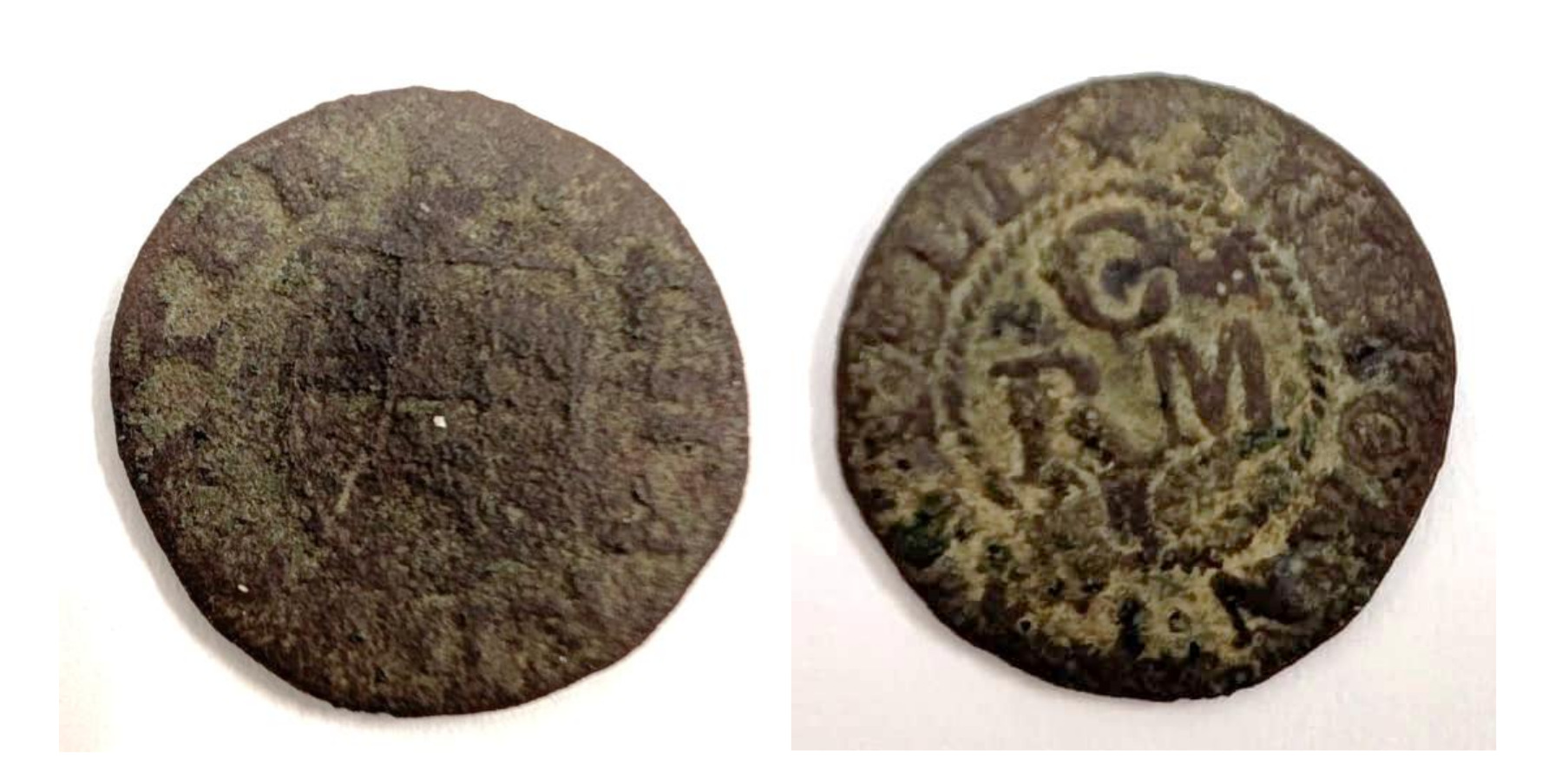
Specific Token Details
The above example was found by Stuart Goodacre (HTC Estates Supervisor) on 20th August 2026, within the parish boundaries.
- Issuer: Richard Cater (candle maker / tallow chandler)
- Location: Horncastle, Lincolnshire
- Denomination: Farthing (1/4d)
- Obverse (Front): Displays the Tallow Chandlers’ arms with the inscription RICHARD CATER.
- Reverse (Back): Bears the text IN . HORN . CASTELL with the initials R . M . C in the centre.
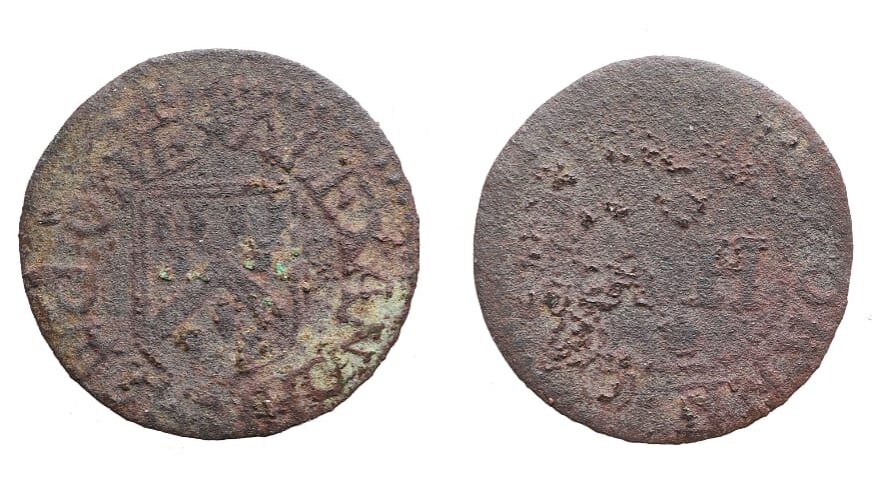
Specific Token Details
The above example was found by Stuart Goodacre (HTC Estates Supervisor) in April 2020, within the parish boundaries.
- Issuer: Alexander Howgrave, grocer
- Date: Approx. 1656
- Location: Horncastle, Lincolnshire
- Denomination: Farthing (1/4d)
- Obverse (Front): Grocers’ Arms – a shield with chevron and 9 cloves, with the inscription ALEXANDER HOWGRAVE
- Reverse (Back): Bears the text IN . HORN . CASTELL
- Size: Diameter: 16mm, thickness: 0.62mm, weight: 0.83g